

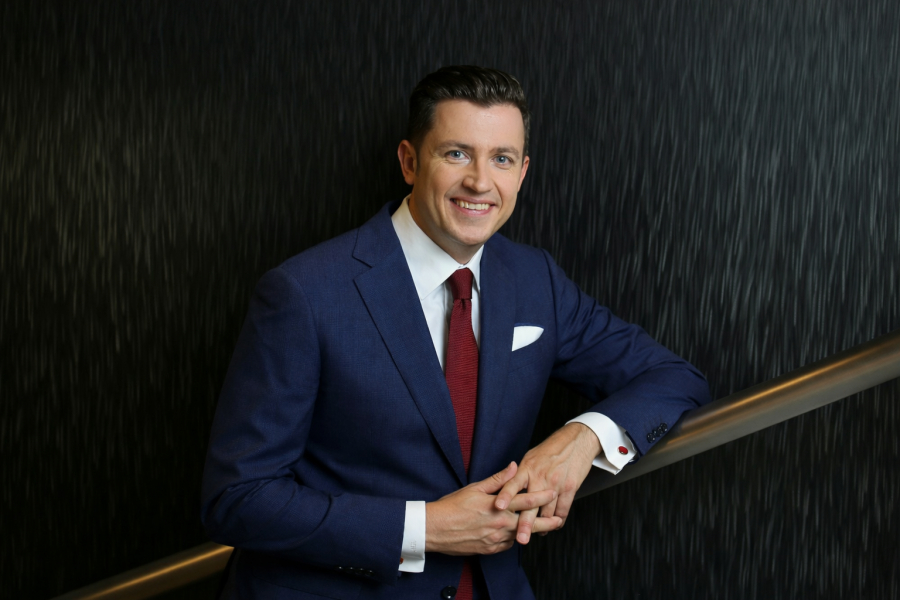
A Rare Transfer of Knowledge: Grant McKenzie Brings 25 Years of Marketing Leadership Experience to Romania
After 25 years leading marketing across Europe's most competitive markets—building teams of 50+, managing P&Ls exceeding €500 million, and navigating brands through economic crises and digital transformation—Grant McKenzie is returning to Romania in 2026 to share what he's learned. This represents an uncommon opportunity: a senior marketing practitioner trained at Mars Inc (known as "the Real University of Marketing"), scaled brands through SABMiller's European operations, led regional and global functions at ASAHI, and now works with businesses from retailers to start-ups—bringing his accumulated experience directly to Romanian marketing and business leaders.
Romania played a formative role in Grant's own leadership development. During three years here as Marketing Director, he built teams, launched innovation, and renovated core brands during both external economic crisis and internal organizational challenges. That experience shaped how he thinks about building marketing capability under pressure.
Now, through a senior-level programme with the Romanian Institute of Marketing, Grant is making his frameworks and methods accessible to CEOs who want marketing to deliver measurable business impact, and to marketing leaders ready to strengthen their strategic influence at board level.
The programme addresses a gap many senior leaders recognize: marketing is often seen as creative but not credible, exciting but not accountable. Grant's approach centers on what he calls "marketing science best practice"—not academic theory, not Hollywood-style storytelling in big conferences, but evidence-based methodology proven across industries, markets, and business cycles. For marketing professionals navigating the tension between delivering short-term results and building long-term brand value, between adopting new technologies and maintaining strategic clarity, between being a functional expert and a business leader—this programme offers tested frameworks from someone who has worked through these same challenges at scale.
For those who may not know you yet, who is Grant McKenzie? How did your journey from marketing practitioner to marketing leader develop over time — and what role has Romania played in that journey?
I think about my marketing journey in four key stages:
Firstly at University – this is where I first developed the enthusiasm. I studied business but found marketing the most exciting, relevant and the one I was good at. I left with enthusiasm and talent but no experience.
Secondly I joined Mars Inc after University, it was called the Real University of Marketing. Mars, as a private company, valued and understood the power of brands built consistently and with a science mindset. They acted both for long term and short term and invested in all 4Ps. I left with a strong foundation of brand building.
The third stage was SABMiller – the practical opportunities, the experience. I developed into a Marketing Director, leading teams, setting strategy and agendas. I started small in Spain, then 3 years of turmoil in Romania during the crisis. We had the external crisis and our own internal ones. There I was building for the future. Setting up the teams, developing talent, launching innovation, renovating the core brands. After three years, I was made an offer I couldn't refuse and headed up the largest and most prestigious business in Europe – Czech/Slovakia. A large team and lots of resources and responsibilities. After 11 years as in-country Marketing Director I had learned how to make an organization work and deliver in-country.
Then after ASAHI became the new owner, I moved into a regional and global role – heading the matrix, leading marketing leaders, instituting marketing across the organization: developing global brand strategies, building marketing capability and creative excellence, and shaping group-wide strategic direction. I developed both a matrix leadership approach and an organizational perspective on how marketing drives business growth
Now - a new phase - and I am a consultant working with a broad range of businesses – retailers, industrial manufacturers, agencies and start-ups. Helping them understand how to make marketing work for them and how it can deliver growth. Here I apply agility and flexibility to adapt models that work for each industry and business.
We know marketing has a long history of practice as a profession grounded in facts, evidence and principles. At the same time, it is clearly not an exact science. One thing we really appreciate about your approach is that you call it "marketing science best practice" - not theory, not soft skills, but method! What does this really mean and why is it still overlooked by many senior leaders?
Firstly, most senior leaders don't know marketing science or best practice. It's not really taught like accounting or law and to be fair the science has really been codified in the last 10-15 years.
Secondly, marketing has got itself confused by rewarding creativity that doesn't work, criticizing effective work and basically arguing with itself. We are our own worst enemies. Therefore, it looks like there are no rules – this is false.
Third, all professions value experience. Experience and knowledge equal expertise. The ability to apply judgment gained from experience sets you apart. You want the most experienced surgeon, the most experienced lawyer. But a lot of CEOs I meet make the mistake of chasing young marketers eg. who are "digital savvy" or know young consumers– as they think marketing is fashion. This is a mistake. It's the only profession that does not consistently value experience and expert knowledge. But this is changing.
My approach is to explain in simple ways the rules of marketing success and help guide leaders on how to practically apply them step by step. I am not a consultant who has never done it. I know it takes time and effort and that you need to engage people on the journey. The fact is every business leader considers their brand or business to be special, unique and above the laws of marketing. My role is to kindly help them realise that's not the case.
You've led marketing teams of 50+ people, managed P&Ls over €500 million, made portfolio and pricing decisions under intense CFO scrutiny. What's one framework or principle from "marketing science" that helped you make better decisions under that kind of pressure?
I think about this in three ways:
1. Be market oriented and really understand consumers in your category not by stereotypes, but in reality. Have the humility to realise you are most likely not the consumer and you and your managers are out of touch with them. Fix it. Find the methods to get under the skin of what motivates them – behavioural science. Answer the "why" questions, not only the "what". Most marketers in Romania are highly educated, sophisticated and young but in many categories the actual consumers are totally different.
2. Demonstrate in real terms you understand how the business and market works – the importance of all the Ps. Learn where you can save money and offer efficiency, don't only ask for money. Prioritise and understand which tool and which lever you need to pull for different situations.
3. Finally, "Simplicity is the ultimate sophistication". Many marketers seem to complicate things. Many decisions or issues are straightforward if you understand the two points above. Consumers want simplicity but too often we think "more is more" when the opposite is true. Give yourself space to think.
Marketing is not dominated by tech, only bad marketing, preached by untrained, weak marketers and ignorant CEOs. Tech has been as useless to marketing at times as it has been beneficial
Marketing is increasingly dominated by technology, platforms and tools. Why do you believe strong fundamentals matter more than trendy technology, especially in challenging or declining markets?
Marketing is not dominated by tech, only bad marketing, preached by untrained, weak marketers and ignorant CEOs. Tech has been as useless to marketing at times as it has been beneficial – Metaverse, VR? Recently we have come to realise that we have been marketed to by big tech and highly funded start-ups to waste money. But marketing science and smart marketers are fighting back.
Once you have lived through the last 25 years of tech in marketing like me - mobile, social media, ecomm, VR, AI- you begin to correlate success with fundamentals. You see the case studies at Effies and how tech helps propel brands with the best fundamentals to success and bankrupts those with weak ones.
When I see the work of most start-ups, the biggest gap is in the quality of what I call the fundamentals
- A really strong brand positioning that is competitive
- A clear and powerful creative platform
- A strong brand visual identity
- Marketing budgeting and planning that aligns to science.
90% have weak to awful fundamentals which means the money they are spending is not working hard enough for them. Consistency and clarity are missing and therefore even when they have cut-through and compelling ideas, they end up advertising the category or competitors.
When budgets are under pressure, what are the most common mistakes leaders make in marketing investment decisions? What does good judgement look like in these moments?
So it really is specific to each case but the top three are:
1. Not aligning budgets to strategy – ie. growth, efficiency. Cutting it expecting there are no consequences. There are. Always. Even if it takes 2-3 years to really see the impact. By keeping investing when others give up you are likely to win long term.
2. Listening to hype and not applying science. Often going all in on a new tech or platform. Keeping what is cool not what is effective.
3. Not making choices – so spreading resources too thinly on too many things instead of doing one or two things very well.
You place strong emphasis on people and capability. Why do you see sourcing, developing and retaining strong marketers as one of the most critical — and underestimated — drivers of sustainable growth?
Marketing is psychology applied to business, it's the glue that combines long term strategy with operational excellence. It needs great capability to make it work. But it's one of the toughest things to get right as, indeed, it can be subjective.
Simply like any aspect of life, I have experienced the amazing results you get from a high performing team and the reverse. It can drive big business effects.
As a general rule, marketers in Romania are undertrained compared to their colleagues in for example finance. They lack consistent understanding of the science, the rules and the best practice. More often than not, they love the Hollywood surface, but not the business. Some marketers lack the talent for marketing – they are not naturally insightful or good storytellers. Having a view of competencies and behaviours of great marketers would help. I often help CEOs with how to evaluate and measure marketers.
As a general rule, marketers in Romania are undertrained compared to their colleagues in for example finance. They lack consistent understanding of the science, the rules and the best practice
Many experienced marketers remain strong experts but never fully make the transition to true marketing leadership. Why is that?
Yes because it's a different thing really. You need to set standards, develop processes and systems, inspire people and position marketing in the organization as the right hand of the CEO.
In the early part of your career you move up based on technical skill. But then it's your ability to lead teams and then influence an organization that matters. Many great marketers make lousy leaders because they don't adjust and change. The most common mistake is not re-orienting their focus to building credibility and trust with other board members, and effectively providing the tools needed to the team.
Not providing a clear picture of the future or creating credible growth strategies, instead doing what they always did – being involved in the marketing tasks, micro-managing and sticking to their comfort zones.
You need to set standards, develop processes and systems, inspire people and position marketing in the organization as the right hand of the CEO.
Marketing still struggles to be fully trusted by finance and boards. What does it actually take to make marketing performance credible, defensible and decision-ready at that level?
Well firstly it's not just data. Anyone who says that is selling you something to do with data. But data matters. It relates to the previous answer. As a marketing leader, you first are a board member then a functional leader not the other way round. So you need to think about the role marketing is playing in corporate strategy and growth and work back from that. Too often I see the opposite. Marketing leaders talking about what they think is important (brand equity, advertising) and hoping that everyone else works out why this is important. Taking a long and short term perspective and using the available marketing science to actually explain how marketing works.
I want it to help CEOs improve their business. I want to help marketing leaders be more successful. I want marketing to be seen as a profession at the same level as Finance. Details are different but principles are consistent.
You're bringing the experience, frameworks and hard-won lessons from 25 years of leadership to Romania in 2026 through a senior-level programme organized by the Romanian Institute of Marketing. What change do you hope this will create, and what makes it different from other leadership or marketing initiatives?
So I want it to help CEOs improve their business. I want to help marketing leaders be more successful.
Do they have the capability they need? Generally the level of professional training in marketing is too low. Training does not mean going to Hollywood style conferences. It means training like the finance team: evidence-based marketing.
I have spent my career studying marketing. I became Chartered in Marketing at age 23 after University. It's given me an amazing career so far. I want marketing to be seen as a profession at the same level as Finance. Details are different but principles are consistent.
I don't want this to be either pure theory, nor Hollywood funny stories but a combination of how marketing science can explain real world success and failure and the dramatic impact marketing has on business performance.
Want to work directly with Grant McKenzie?
Grant is bringing his 25 years of marketing leadership experience to Romania in 2026 through executive coaching, mentoring programmes, and the Marketing Leadership Programme with the Romanian Institute of Marketing.
Whether you're a CMO seeking board-level credibility, a marketing leader ready to make the transition from expert to strategic leader, or a CEO wanting to maximize marketing's contribution to business growth—Grant's coaching and mentoring can accelerate your progress.
Be the first to know about coaching programmes, mentoring solutions, and the Marketing Leadership Programme. Register your interest here.
